
01
The process, step by step
Most purchases follow the same five steps. The durations are typical ranges; your contract, your lender and the title company set the real dates.
01Consultation
Goals, budget and strategy
A video call or a WhatsApp chat to define the area, the strategy and how you will pay: cash or a loan.
Typical: 1–3 days
02Financing
Proof of funds or a loan pre-approval
For cash, bank statements that show the funds. For a loan, an application with a lender that works with foreign nationals, who usually ask for a larger down payment.
Typical: 1–4 weeks
03Search
Shortlist, video tours and offer
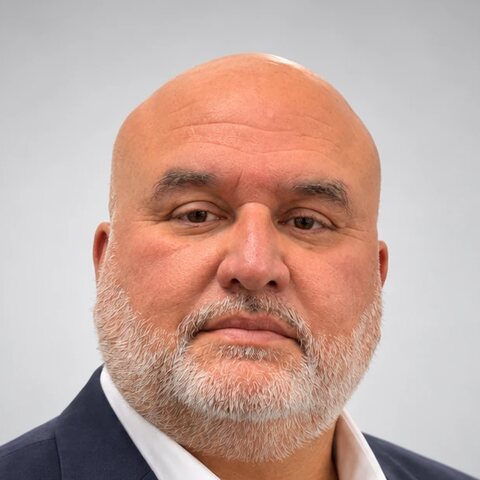
Ricardo filters MLS listings by the numbers that matter, shows them in person or by video and negotiates your offer on the state-approved TREC contract.
Typical: 2–8 weeks
04Escrow
Earnest money, inspection and title
Your earnest money goes to the title company, not to the agent. You inspect during the option period while the title company checks the title and prepares the closing.
Typical: 30–45 days with a loan; often less in cash
05Closing
Sign in person or remotely, then the keys
Sign at the title company, through an online notary or with a power of attorney, if the title company and lender accept it. Then utilities, insurance and, if you rent, a property manager.
Typical: 1 day to sign; 1–2 weeks to hand over
Prefer to talk it through?
Ricardo can walk you through each step for your case, in Spanish or English.
02
Can you buy? Yes.
U.S. law does not require citizenship or residency to own real estate. Mexican citizens buy in their own name, together with a spouse or relative, or through a company.
Texas SB 17 (2025). Since September 1, 2025, Texas restricts purchases by governments, companies and certain individuals tied to countries that the U.S. intelligence community flags as national-security risks, or that the governor designates. The countries currently understood to be covered are China, Iran, North Korea and Russia. Mexico is not among them, and the law does not apply to U.S. citizens or permanent residents. Citizenship matters, not only where you live: the law also covers citizens of those countries who live outside the U.S., for example in Mexico, unless they have become citizens of the country where they live. Read the law.
Buying does not change your immigration status. Owning property in the U.S. does not give you a visa or residency. For immigration questions, talk to an immigration attorney.
In your name or through an LLC?
Decide before you sign, because the buyer named in the contract matters. A U.S. LLC with a single foreign owner must file IRS Form 5472 with a pro forma Form 1120 every year (the penalty for not filing is $25,000), and a Texas LLC files annual franchise tax reports even when it owes nothing. If you will finance, ask your lender early whether it lends to an LLC. Plan the structure with a cross-border CPA and an attorney. More in the tax guide.
03
What you need
- A valid passport. It identifies you to the title company and to the lender.
- Proof of funds. Recent bank statements for the down payment and closing costs, or for the full price if you pay cash.
- For a loan, the lender’s list. It may include bank statements, proof of income and your U.S. visa if you have one. Ask whether documents in Spanish need a certified translation.
- Who will be on the title. You, you and your spouse, or a company. Decide before the offer.
- An email address and a phone with WhatsApp for electronic signatures and closing updates.
- An ITIN, later. You do not need it to buy, but you will to file a U.S. tax return for rent or a sale. How to get one.
- Insurance quotes, including wind and flood near the coast, before your option period ends.
04
Financing
Almost half of foreign buyers pay cash: 48% in the National Association of REALTORS® report for April 2025 to March 2026. If you finance, these are the usual paths. Terms change from lender to lender, so compare at least two written offers.
Cash
The simplest path and usually the fastest closing. You show proof of funds with the offer and wire the balance to the title company before closing.
Foreign-national loan
Some U.S. lenders lend without a Social Security number or U.S. credit history. Expect a larger down payment (published lender guides cite roughly 25% to 50%) and a higher rate than a standard mortgage.
DSCR loan
Approved mainly on the property’s expected rent rather than your personal income. Useful for rentals; ask whether the lender offers it to foreign nationals.
Funds from Mexico
Some buyers use savings or credit in Mexico and then buy in cash in Texas. Compare the total cost and the exchange-rate risk, and plan the transfer early.
05
Your investment, protected
A Texas purchase has safeguards built in. These are the ones that matter most when you buy from a distance.
Licensed in Texas
Agents and inspectors are licensed by TREC, and you can look up any license. Search TREC licenses. TREC #643769
Your deposit, in escrow
Earnest money goes to the escrow agent named in the contract, usually the title company, never to the agent.
Title insurance at state rates
Texas sets title insurance premiums by law, so the basic premium is the same at any title company; escrow and other fees can differ.
An option period to inspect
With the TREC contract you pay an option fee for an unrestricted right to terminate during a period you negotiate: time to inspect and confirm the numbers.
A written agreement, negotiable fees
Texas requires a written buyer agreement before showings. It must state the amount or rate the broker will be paid, and say that broker compensation is not set by law and is negotiable.
Updates in your language
Every milestone explained in Spanish or English, on WhatsApp, by phone or by email, whichever you prefer.
06
Cash to close: an example
A hypothetical purchase with a foreign-national loan, using the calculator’s editable assumptions. It is an illustration, not a quote.
Hypothetical purchase price: $250,000 · foreign-national loan
- Down payment (30%)
- $75,000Est.
- Closing costs (3%)
- $7,500Est.
- Cash to close
- $82,500
Illustrative estimates only, not financial advice or a guarantee of results. Assumptions are editable; taxes, insurance, rent and rates vary. Verify with a lender, insurer and CPA.
Your lender may also ask you to keep reserves in the bank, and the title company’s closing statement shows the exact amount. Run your own numbers.
07
Taxes, in brief
- Texas has no state income tax. The state constitution prohibits it; federal taxes still apply.
- Property tax is local. The Cameron Appraisal District values the property as of January 1, and bills are generally due by January 31. Homestead exemptions are only for a principal residence.
- Rent: 30% of the gross rent by default, or tax on the net income if you elect it and file Form 1040-NR every year.
- When you buy from a foreign seller (FIRPTA): you, the buyer, are generally the withholding agent. The title company normally handles the seller’s certification or the withholding at closing; if no one withholds, the IRS can hold the buyer liable.
- When you sell (FIRPTA): the buyer generally withholds 15% of the price for the IRS. It is a prepayment that you settle on your return.
- In Mexico: if you are a Mexican tax resident, your U.S. income may also have to be reported there. The two countries have a tax treaty.
08
Frequently asked questions
Legal
Can I buy property in Texas if I am not a U.S. citizen or resident?
Yes. U.S. law does not require citizenship or residency to own real estate, and foreign nationals buy in their own name or through a company. Since September 1, 2025, a Texas law (SB 17) restricts purchases by governments, companies and certain individuals tied to countries the U.S. flags as national-security risks (currently understood to be China, Iran, North Korea and Russia) or that the governor designates. Mexico is not one of them, and the law does not apply to U.S. citizens or permanent residents. Citizenship matters, not only where you live: the law also covers citizens of those countries who live outside the U.S., for example in Mexico, unless they have become citizens of the country where they live. If your situation is unusual, confirm it with a Texas real estate attorney.
Should I buy in my own name or through an LLC?
It depends on liability, taxes, estate planning and financing, so decide before you sign the contract, because the buyer named in it matters. A U.S. LLC owned by one foreign person is usually ignored for income tax, but it must still file Form 5472 with a pro forma Form 1120 every year, and the IRS penalty for not filing is $25,000. A Texas LLC also has annual franchise tax reports even when no tax is due. Plan the structure with a cross-border CPA and an attorney.
What do I sign with Ricardo before seeing properties?
Since January 1, 2026, Texas law requires a written agreement between the agent and the buyer before the agent shows you residential property (or, if nothing is shown, before an offer is presented for you). It must state the services, whether the agent represents you, whether it is exclusive or non-exclusive, its end date, and the amount or rate the broker will be paid and how that amount is determined, and it must say in conspicuous language that broker compensation is not set by law and is fully negotiable. An agreement only to show property cannot be exclusive and lasts 14 days at most. You will also receive the state form Information About Brokerage Services, which explains how representation works in Texas.
Is there anything special about buying ranch or farm land?
Yes. Under the federal AFIDA law, a foreign person who acquires or transfers an interest in U.S. agricultural land must report it to the USDA within 90 days, on Form FSA-153 or through the USDA online portal. Land used for farming, ranching or timber counts, except tracts of 10 acres or less in total that produce no more than $1,000 a year in sales. The penalty for not reporting can reach 25% of the land’s fair market value. In June 2026 USDA proposed removing that small-tract exemption and widening what counts as agricultural land, so confirm the rule in force before you buy land.
Financing
Can I get a mortgage in the U.S. without an SSN or U.S. credit history?
Often, yes: some U.S. lenders offer foreign-national loans. Expect a larger down payment than a standard mortgage (published lender guides cite roughly 25% to 50%), a higher interest rate, and documents such as your passport, bank statements and proof of income. Terms vary a lot by lender, so compare at least two written offers. Ricardo is not a lender.
Do most foreign buyers pay cash?
Almost half do. In the National Association of REALTORS® report for April 2025 to March 2026, 48% of foreign buyers paid all cash, compared with 28% of all buyers. A cash offer is simpler and usually closes faster. Plan the transfer from Mexico ahead of time and always confirm the title company’s wiring instructions by phone.
What is a DSCR loan?
A loan for rental property that is approved mainly on the property’s expected rent instead of your personal income. The lender divides the rent by the monthly payment (principal, interest, taxes, insurance and HOA); a ratio above 1.00 means the rent covers the payment. Ask each lender whether it offers DSCR loans to foreign nationals: availability, down payment and rate vary.
How much cash should I plan to bring to closing?
With a loan: the down payment plus closing costs, and any reserves your lender asks you to keep in the bank. Our calculator assumes 30% down for foreign buyers and closing costs of about 3% of the price, but those are editable assumptions, not quotes. Your lender’s written estimate and the title company’s closing statement give the real figure.
Taxes
What is FIRPTA and when does it apply to me?
FIRPTA can matter to you twice. When you buy from a seller who is a foreign person, you, the buyer, are generally the withholding agent: at closing the seller normally certifies that they are not a foreign person, or the tax is withheld from the sale proceeds, usually through the title company. If the seller is foreign and no one withholds, the IRS can hold the buyer liable for the tax. When you sell, the roles reverse: your buyer generally must withhold 15% of the amount realized and send it to the IRS within 20 days. If the buyer will live in the home, withholding is 0% up to $300,000 and 10% up to $1,000,000. The withholding is a prepayment, not the final tax: you file a U.S. return to settle it, and you can ask the IRS for a withholding certificate (Form 8288-B) to reduce it.
How is my rental income taxed if I live in Mexico?
By default the U.S. taxes a nonresident’s rent at 30% of the gross amount, with no deductions, usually withheld by the tenant or property manager. You can instead elect to treat the rent as effectively connected income: you give the payer Form W-8ECI, file Form 1040-NR every year and pay graduated rates on net income after expenses. The return must be filed on time (within 16 months of its due date) to keep the deductions. Ask a CPA which option fits you.
Do I need an ITIN to buy?
Not to buy, but you will need one to file a U.S. tax return, for example Form 1040-NR for your rental income or after a sale. An ITIN is a 9-digit IRS number for people who are not eligible for a Social Security number. You apply with Form W-7, normally together with the tax return. The IRS says to allow 7 weeks, or 9 to 11 weeks in tax season or when applying from abroad.
Does Texas charge a state income tax?
No. The Texas Constitution prohibits a personal income tax, so there is no state tax on your rental income or gains; federal taxes still apply. Texas funds local services mainly through property taxes. If you are a tax resident of Mexico, Mexican law taxes residents on income from any country, so your U.S. income may also have to be reported in Mexico. The U.S. and Mexico have an income tax treaty; a CPA who works in both countries can coordinate the two returns.
How do property taxes work in Cameron County?
Texas has no state property tax: the county, the city, the school district and other local units each set a rate. The Cameron Appraisal District values every property as of January 1, and the bill is generally due by January 31 of the following year, with penalties and interest from February 1. Homestead exemptions apply only to the owner’s principal residence, so an investment property usually pays the full rate. You can check any property’s value and tax units on the appraisal district’s website.
Remote closing
Can I close without traveling to Texas?
Often, yes. Texas law allows an online notary commissioned in Texas to notarize your signature by video even when you are outside the state, and a power of attorney is another option. Whether a remote closing works for your purchase depends on the title company and, if you finance, on the lender, so ask both at the start, not the week of closing.
Can someone sign for me with a power of attorney?
Yes, if the title company (and the lender, if any) approves the document before closing. A power of attorney signed in Mexico generally needs an apostille to be used in Texas; both countries are parties to the Hague Apostille Convention. Send a draft to the title company early so they can confirm the wording, and have it reviewed by an attorney.
How do I send money safely?
Send funds only to the escrow account of the title company named in your contract, and only after confirming the wiring instructions by phone, using a number you verified on your own, not one from an email. Ricardo will never ask you to send money over WhatsApp or email. Wire fraud often starts with an email that looks real and changes the account at the last minute.
Can I evaluate a property without traveling?
Yes. Ricardo can walk you through a property on a video call, and you can hire a licensed inspector during the option period; in Texas, TREC licenses real estate inspectors. You get the MLS data, the appraisal district record and the inspection report in writing. If you can, one visit before closing helps, but it is not required.
Management
Who looks after the property if I live in Mexico?
Usually a property manager. In Texas, someone who shows or leases your property for pay generally needs a real estate license from TREC, so ask for the license number and a written management agreement that covers fees, repairs, rent deposits and reports. You can check any license on the TREC website.
What insurance do I need near the coast?
A homeowner’s or landlord policy, and two coverages people often miss. Wind and hail: Cameron County is in the Texas Windstorm Insurance Association’s coverage area, and TWIA covers wind and hail only, generally when a private insurer has turned you down. Flood: it is a separate policy; check the property on FEMA’s flood maps. Get quotes before your option period ends, because they affect your numbers.
Can I rent my place by the night on South Padre Island?
Yes, within the city’s rules. Short-term rentals must be registered with the City of South Padre Island and renewed, and owners remit hotel occupancy tax to the city every month. The state hotel tax of 6% also applies to stays of 29 days or less; if you book through a platform that collects it, the platform remits the state portion. The city can also suspend or revoke a short-term rental license after repeated violations by guests, so ask how the building and the property manager handle complaints. Check the condo or HOA rules too: some limit rentals.
References
Sources
- Texas Legislature: SB 17 (89R), bill history and enrolled text
- Texas Legislature: SB 1968 (89R), written buyer agreements (enrolled text)
- TREC: What changes in 2026 about buyer/tenant representation in Texas
- TREC: Information About Brokerage Services
- TREC: One to Four Family Residential Contract (Resale)
- Texas Register: title insurance premiums promulgated by the commissioner (Insurance Code §2703.151)
- Texas Legislature: HB 1217 (85R), online notarization
- HCCH: Apostille Convention status table
- IRS: FIRPTA withholding
- IRS: Exceptions from FIRPTA withholding (seller’s non-foreign certification)
- IRS: Nonresident aliens, real property located in the U.S.
- Texas Comptroller: property tax basics
- National Association of REALTORS®: international buyers, April 2025 to March 2026
Last updated


